An Introduction to Fire Damage, Soot Damage, and Smoke Damage.
Today’s homes and businesses are fundamentally different from those built even a few decades ago. The shift toward synthetic materials has dramatically changed how fires behave—and what they leave behind.
Call us now at 212-295-5835 or click/tap the button to schedule a FREE Claim Review & Strategy Session with a Public Adjuster to get started.


After Fire Damage: The Hidden Damage Most Property Owners Overlook
When people think about fire damage, they picture what’s most obvious: charred walls, burned framing, and visible destruction. But in modern fires, the damage you don’t see is often more dangerous, more widespread, and more expensive to properly address.
Today’s homes and businesses are fundamentally different from those built even a few decades ago. The shift toward synthetic materials has dramatically changed how fires behave—and what they leave behind.
Understanding these hidden impacts is critical not only for proper restoration, but also for protecting your health, your property value, and your insurance claim.
A Different Kind of Fire Damage
Fires, even a few decades ago, primarily involved natural materials—wood framing, cotton fabrics, and limited plastics. While destructive, those fires produced relatively simpler combustion byproducts.
Modern fires are a different animal entirely.
Today’s environments are filled with synthetic materials:
- Polyester, nylon, and blended fabrics
- Foam cushions and mattresses
- Engineered wood products and laminates
- Plastic-based furniture and décor
- Electronics and composite materials
- Fire-retardant chemical treatments
These materials don’t just burn—they chemically transform.
Instead of producing relatively simple soot, they release complex, adhesive, and often corrosive residues that behave very differently than what most industry standards were designed around.
What We’ve Learned From Soot Testing
One of the areas we place significant emphasis on as a firm is effective soot testing and analysis.
This is where a lot of assumptions in the industry begin to break down.
Under magnification, modern soot looks very different from the conventional soot that informed the vast majority of post-fire standard operating procedures and carrier guidelines. Those procedures were built around older fire loads—primarily natural materials with more predictable combustion byproducts.
That is no longer the case.
Modern soot is:
- Finer and more pervasive
- More chemically reactive
- More adhesive
- More capable of penetrating porous and semi-porous materials
This has a direct impact on how a property should be evaluated and restored.
And it leads to an uncomfortable but important conclusion:
Many of the standards still being applied today are outdated—and therefore inadequate for modern losses.
Covered, But Often Overlooked.
The additional steps required to properly address modern fire contamination are not upgrades or optional services.
They are part of the policyholder’s obligation to mitigate further damage after a loss.
If contamination is left behind and continues to cause damage—corrosion, odor, material breakdown—that is exactly what mitigation is meant to prevent.
The issue isn’t coverage.
The issue is whether the damage is properly identified in the first place.
The Real Threat: What You Can’t See
1. HVAC Systems: More Advanced, More Vulnerable
HVAC systems are far more common—and more advanced—than they were decades ago.
Modern systems use higher-efficiency filters designed to capture finer airborne particles. And they do exactly that.
The problem is what they’re capturing.
These systems will absolutely trap modern soot—but unlike traditional dust or natural-material soot, modern residues are often corrosive and chemically active.
That means:
- Filters don’t just collect contaminants—they can degrade from them
- Internal components can be exposed to reactive residues
- The system itself can become both contaminated and compromised
If not properly evaluated and addressed, the HVAC system doesn’t just spread contamination—it becomes part of the damage.
2. Corrosion That Shows Up Months Later
Corrosion from modern soot is not always immediate.
In many cases, it’s delayed.
What we routinely see is:
- Appliances functioning initially after the loss
- Followed by failure weeks or months later
Ranges, refrigerators, televisions, HVAC components, and other electronics may fail 3, 5, even 8 months after the fire.
By that point:
- The loss feels “old”
- The connection to the fire is no longer obvious
- The failure is often treated as unrelated
But in many cases, it’s not.
It’s the result of soot that took time to corrode internal electrical components.
And because of that delay, these damages are frequently never claimed, never recognized, and never addressed.
3. Contents Outside the Burn Area
A common assumption is that if something wasn’t burned, it wasn’t damaged.
In reality, smoke and particulate travel far beyond the visible fire area.
They follow airflow patterns, pressure differences, and thermal currents—ending up in:
- Closets
- Cabinets
- Drawers
- Adjacent rooms and floors
This is especially relevant today because many of these contents are synthetic—and more susceptible to retaining contamination.
4. Odor Is Evidence
Smoke odor is not just a nuisance—it’s a signal.
If you can smell it, it means contamination is still present.
Modern fire odors are:
- More persistent
- More chemically complex
- More deeply embedded
Masking odor doesn’t solve the problem. It just delays it.
5. Materials That Used to Be Cleaned—But Shouldn’t Be Anymore
This is one of the biggest shifts—and one of the most misunderstood.
Historically, many materials were routinely cleaned after a fire:
- Furniture
- Drapes
- Fixtures
- Finishes
And that made sense—because those items were made primarily from wood, metal, and natural fibers.
Today, those same categories are often made from:
- Plastics and composites
- Synthetic fabrics
- Foam-based structures
- Resin-based finishes
- Engineered surfaces (tile-look, stone-look, laminate systems)
These materials behave very differently.
They absorb, retain, and react with modern soot in ways that make full decontamination far less reliable.
But here’s where it gets complicated:
Because these items were historically cleaned, an unwritten industry standard developed—one where replacement at full replacement cost value (RCV) was viewed as excessive, or even dishonest.
That standard hasn’t kept up with the materials.
And it hasn’t kept up with the science.
Insurance carriers are not unaware of this. They understand the composition of modern soot and account for it in underwriting.
But keeping mitigation standards narrow benefits them:
- It minimizes claim severity
- It limits scope
- It creates opportunities to challenge more comprehensive, and often more appropriate, remediation
The result is a gap between what is scientifically appropriate and what is commonly approved.
6. Water and Secondary Spread
Water from fire suppression can:
- Push contaminants deeper into materials
- Spread residues into previously unaffected areas
- Create conditions for microbial growth
So even areas untouched by flame can become significantly impacted.
Why These Issues Continue to Be Missed
Most inspections follow a checklist.
Those checklists were built around older fire behavior.
If the checklist doesn’t account for:
- Synthetic material loads
- Chemically active soot
- Delayed corrosion
- Modern HVAC systems
Then certain categories of damage simply never get identified.
Not because they aren’t real.
Not because they aren’t covered.
But because they weren’t looked for.
Who You Call First Matters
After a fire, most property owners instinctively call their insurance carrier first.
That may not be in your best interest.
By the time the loss is being evaluated, the scope is already being shaped. What gets documented gets addressed. What doesn’t, doesn’t.
And in modern fire losses, the financial impact of what gets missed is not small.
In today’s fires, the true cost to return a property to pre-loss condition is often in the mid-six-to-seven-figure range. The gap between what is initially scoped and what is actually required can easily reach hundreds of thousands of dollars.
A major driver of that gap is contents.
Historically, contents in fire losses were heavily cleaned rather than replaced. That made sense when most items were made of wood, metal, and natural fibers.
But today, that precedent no longer aligns with reality.
Modern contents are largely synthetic. When exposed to modern fire byproducts, they don’t just get dirty—they become contaminated.
Yet many of these items are still treated as if they can simply be cleaned.
That “small” decision—clean versus replace—creates massive dollar value differences across an entire home.
And more importantly, it creates ongoing risk.
A children’s table made of polymer that is cleaned instead of replaced becomes a continuous source of low-level contamination.
No one, when presented with that scenario, would argue that replacement is excessive.
The fact is, your couch is no different.
Your dining table is no different.
Your desk, your dresser, your end tables—no different.
The only reason the reaction changes is because the use is no longer visualized.
In practice, the entire home should be evaluated with the same standard as the child’s table.
In many cases, that means a significant portion of contents should be replaced—not as an upgrade, not as an exaggeration—but as a necessary step to properly mitigate the loss.
And when it is properly documented and presented, it is typically covered.
The problem is not eligibility.
The problem is execution.
That is why having a public adjuster involved immediately—before scope is defined—is critical.
Because once something is missed early, it becomes much harder to bring it back into the claim later.
And when the stakes are this high, that margin matters.
The Bottom Line
Modern fires leave behind far more than burn damage.
They create a complex environment of:
- Chemical contamination
- Hidden corrosion
- Airborne particulates
- Persistent odor
- Material degradation
What you can see is only part of the story.
And increasingly, the real damage is in what gets overlooked.
We don’t make the claim bigger—we make sure it’s accurate.
Final Thought
A fire doesn’t end when the flames are extinguished.
In many ways, that’s when the real damage begins.
That’s why you need the right advocate from day one.
That’s why you need a Public Adjuster firm.
That’s why you need Manhattan Public Adjustment.
Need Help With A Fire Damage Claim?
Call us now at 212-295-5835 or click/tap the button to schedule a FREE Claim Review & Strategy Session with a Public Adjuster to get started.
Fire Claims We've Settled
With our team approach, we have achieved results for our clients that other Public Adjusters could only dream of.
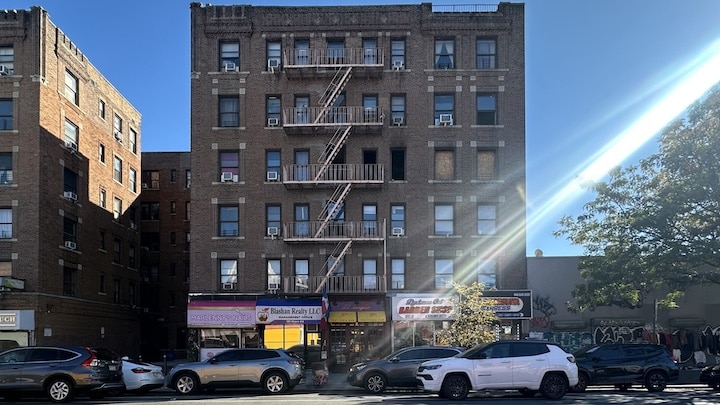
$1,234,034
Washington Heights, New York
4th floor kitchen fire.
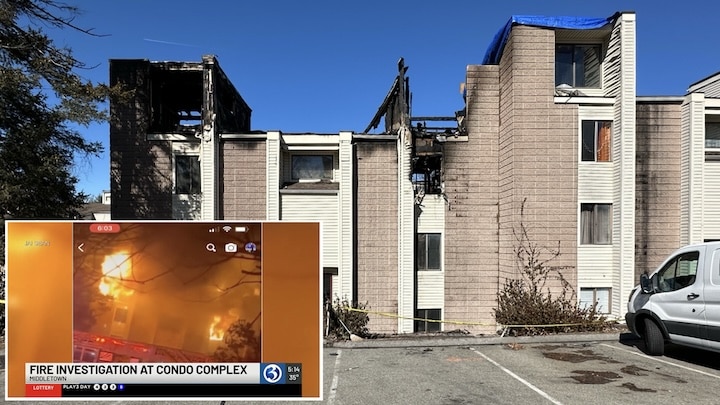
$2,534,003
Middletown, Connecticut
Accidental fire caused by a discarded lit cigarette on an exterior deck.
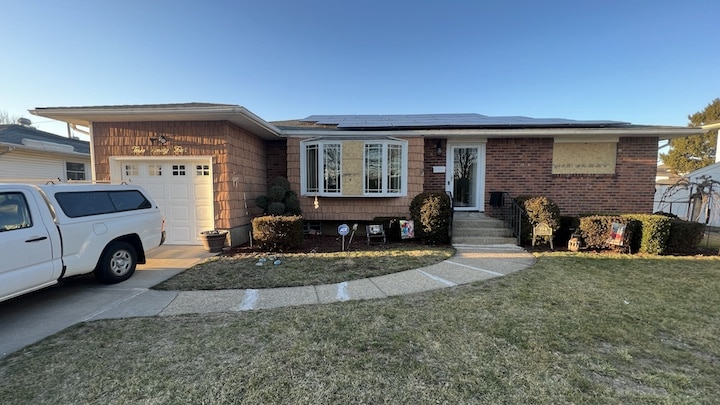
$543,342
Plainview, New York
Electrical fire caused by faulty wiring.
What Our Clients Are Saying
“They know the ins and outs of what an insurance company owes to their insured and that knowledge was able to help us secure far more coverage than we would have been able to ourselves, which far exceeded the investment in working with them. Manhattan Public Adjusters should be your first call after any loss. TEN STARS!!”
-Hillary Sloan
Brooklyn, New York
“…Their expertise, combined with the skilled dedication of the entire team, transformed our insurance claim experience from overwhelming and frustrating to incredibly successful…”
-Chris Gunn
Washington Heights, New York, NY
“Incredible levels of service and honesty. They stay engaged after all payments have been made.”
-Eric Weisberg
Midtown, New York, NY
“I worked with Jennifer K on a very complicated matter–significant water damage throughout an entire historic townhouse–that I came into midway through the process. It was like finding a port in the storm when I took over the work to meet Jennifer… I truly don’t know how I could have gotten all of this done without her, and as difficult as this work was, it was always a pleasure to speak with her. I recommend Jennifer and Manhattan Public Adjustment very very highly.”
-Terence Dougherty
Gramercy Park, New York, NY
“…Great establishment to team with on fire insurance claims. They provide step by step guidance throughout the process and ensured that we received the funds necessary to rebuild…”
-Jamaal Watkins
East New York, Brooklyn, NY
“…We had an outstanding experience with Manhattan Public Adjustment. Their team’s professionalism and experience stood out throughout the entire insurance process. Clear communication, attention to detail, and impressive results make them our top recommendation for anyone navigating insurance complexities….”
-Maya Stepniarek
SoHo, New York, NY
“…My neighbor had a house fire which damaged the left side of my home. Manhattan Public Adjustment, came to my home and helped my family in the most stressful time in our lives. We didn’t have to do anything. They worked behind the scenes and fought the insurance company for the worth of the fire damage and delivered. I highly recommend this company. They are very professional, and caring and trustworthy…”
-Jessica Cannady
Flatbush, Brooklyn, NY
“…Pipe broke in the crawl space and the whole end of the house needed to be gutted. Been in construction for seven months and this company has been with us every step of the way. Been getting steady reimbursements as the project progressed for all expenses. They showed up immediately and are handling everything smoothly. What a great experience from an awful experience, well worth it!”
-Tracy Gardell
Montauk, NY
“When the unthinkable happened and the hot water baseboard heat malfunctioned flooding our home of 33 years, our insurance company was anything but helpful. My husband and I were a thousand miles away, where he was undergoing chemotherapy and too ill to return to our flooded home. Jennifer was very helpful, assisting us, answering our questions, and most importantly challenging the insurance company.”
-Ginny Nuffer
Olean, NY
Get Your Free Claim Review & Strategy Session With A Licensed Public Adjuster Now
On the roughly 45-minute call, we’ll review your damages, coverages, and claim goals, and create a personalized strategy to help you get paid the maximum settlement, expedite your recovery, and navigate the claims process successfully.
Click the button or call 212-540-4150 to schedule a FREE Claim Review & Strategy Session with a Public Adjuster now.